Reviewing the "I Can't Stay Home" Nurse SVG
As a designer who spends more time staring at stitch simulations than I do sleeping, I have learned that not every digital file translates well to thread. We live in an era where design assets are abundant, but finding a graphic that holds up under the needle requires a critical eye. Recently, I pulled the I Can t Stay Home I m a Nurse Svg File into my workspace to evaluate its potential for real-world application. This is not just a review of a pretty picture; it is an assessment of how this specific piece of Crafts and Graphics content performs when subjected to the realities of hoop tension, fabric texture, and client expectations.
First Impressions: Mood and Visual Personality
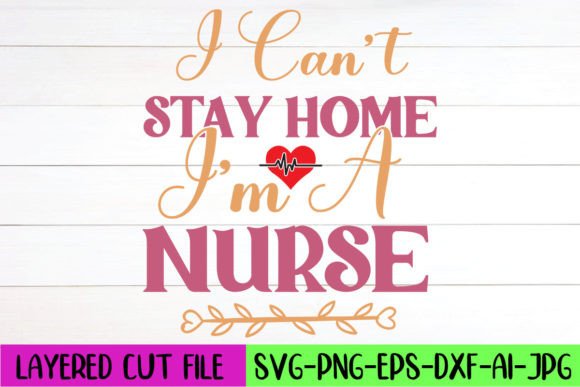
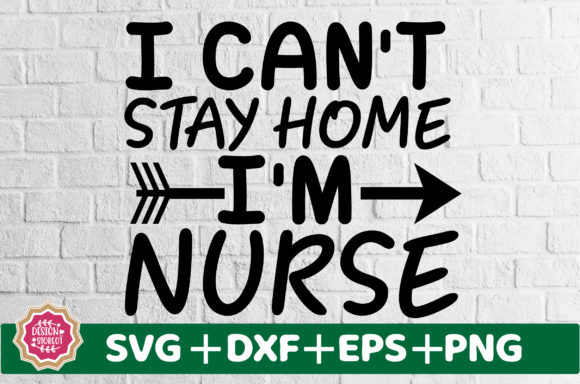
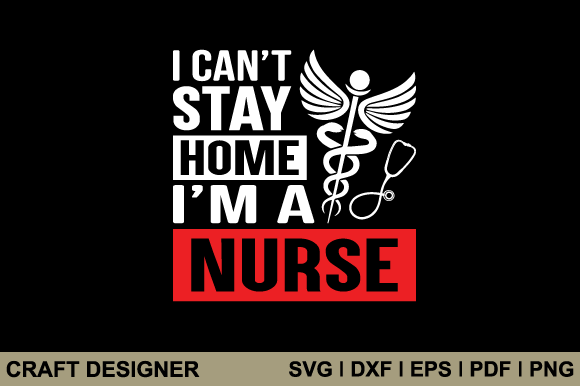
The moment I opened the file, the mood was unmistakable. The phrase "I Can't Stay Home, I'm a Nurse" carries a weight of resilience, humor, and professional pride. Visually, the design relies on strong typography rather than complex illustrations. For an embroidery designer, this is often a double-edged sword. Text-heavy designs demand precision. There is nowhere for sloppy digitizing or poor stitch placement to hide. The layout feels balanced, with a visual personality that is bold yet approachable. It does not scream for attention with chaotic elements; instead, it states its case clearly. This clarity is vital for a machine embroidery design intended for apparel, where readability from a distance is key.
The Real-World Test: From Screen to Sweatshirt
To truly understand the value of this embroidery file, I imagined a specific scenario. A local clinic was organizing a appreciation event, and they needed custom gifts for their staff. I envisioned using this design on a high-quality, heather grey crewneck sweatshirt. This is a classic use case for sweatshirt embroidery. The thick fabric of a sweatshirt provides an excellent foundation for text-based designs, allowing the stitches to sit prominently without sinking into the weave.
In this context, the I Can t Stay Home I m a Nurse Svg File shines. The design is not overly dense, which means it avoids the "cardboard effect" where stiff stitching makes a garment uncomfortable to wear. When I mentally mapped out the stitch density, I realized that a combination of satin stitch for the borders and a lighter fill stitch for any larger graphical elements would work best. If the design includes fine lines, converting them to a running stitch might be necessary to prevent breakage during washing. The result would be a personalized gift that feels professional and heartfelt, boosting morale among the healthcare workers receiving it.
Versatility Across Product Lines
Beyond sweatshirts, this design has legs. I considered how it would perform on a canvas tote bag design. Tote bags are popular among Etsy sellers and small shop product creators because they are practical and serve as walking advertisements. On canvas, the threads need to be robust. I would recommend using a heavier weight thread to ensure the text remains visible against the coarse fabric texture. The design’s simplicity ensures it does not get lost in the weave.
Another viable option is custom apparel like scrub caps or aprons. However, this is where caution is required. An apron often undergoes rigorous washing and exposure to stains. The design must be digitized with tight underlay stitches to ensure longevity. For a baby embroidery project, such as a onesie for a nurse’s child, the scale would need to be reduced significantly. Here, the legibility of the font becomes the primary concern. If the letters become too small, the stitch density might merge, turning distinct characters into a blob of thread. Therefore, while versatile, the design requires scaling adjustments based on the end product.
Technical Considerations and Potential Pitfalls
No design is universal, and the I Can t Stay Home I m a Nurse Svg File is no exception. There are specific scenarios where this graphic should be used carefully. First, consider hoop size. If you are working with a small 4x4 hoop, you may need to crop or simplify the design to fit. Cramming a long sentence into a tiny space compromises aesthetic appeal and stitching clarity.
Second, think about the fabric. Stretchy fabrics, like jersey knits used in t-shirts, require a cut-away stabilizer to prevent puckering. Without proper stabilization, the tension from the embroidery will distort the garment, ruining the finished product. Dark fabrics present another challenge. If the design relies on subtle shading or thin lines, it may disappear on black or navy blue material. In such cases, high-contrast thread colors are non-negotiable. White or bright yellow thread on dark fabric ensures the message pops.
Additionally, curved surfaces like caps require specialized digitizing. A standard flat embroidery file will not wrap correctly around the front panel of a hat. If you plan to create an embroidered patch or cap design, you must account for the push and pull of the fabric on a curved plane. Ignoring this leads to gaps in the stitching or distorted lettering.
Impact on Brand and Customer Trust
For commercial embroidery professionals and craft business owners, the quality of your design assets directly impacts your brand consistency. Using a clean, well-structured SVG like this one signals professionalism. When a customer receives a handmade product that looks crisp and intentional, their trust in your brand increases. This design, with its clear message and adaptable layout, supports brand consistency for shops specializing in medical-themed gifts or heroic profession apparel.
Moreover, the giftability of this item is high. It taps into a sense of community and identity. People want to wear their professions with pride. By offering this design on high-quality items, you are not just selling thread on fabric; you are selling recognition and respect. This emotional connection drives buyer engagement and can lead to repeat customers who appreciate the thoughtfulness behind the holiday embroidery or birthday gifts you create.
Practical Notes for the Designer
Before you commit to production, here are my practical recommendations for working with this file:
- Test on Scrap Fabric: Always run a test stitch-out on the same type of fabric you intend to use for the final product. This reveals issues with tension and density before you ruin expensive material.
- Check Thread Contrast: Use a printable mockup or digital simulation to see how different thread colors look against various fabric backgrounds. High contrast is your friend.
- Inspect Small Details: Zoom in on the SVG. Are there any tiny anchor points or unnecessary nodes? Cleaning up the vector path can sometimes improve the smoothness of the resulting embroidery.
- Confirm Licensing: The product description mentions formats like SVG, DXF, EPS, PDF, and PNG. However, it does not explicitly state the commercial license terms. Before selling digital embroidery file derivatives or finished goods, confirm whether the creator allows commercial use. This is crucial for Etsy seller compliance.
- Stabilizer Selection: Match your stabilizer to your fabric. Tear-away for stable woven fabrics, cut-away for knits, and wash-away for delicate or textured materials where you do not want stabilizer residue.
Final Verdict
The I Can t Stay Home I m a Nurse Svg File is a solid addition to any designer’s library, provided it is used with technical awareness. It is not a plug-and-play solution for every surface, but for the right applications—such as tote bags, sweatshirts, and structured patches—it offers a compelling blend of sentiment and style. By respecting the limitations of stitch density, choosing the right hoop size, and prioritizing fabric compatibility, you can transform this digital asset into a standout embroidery project. It serves as a reminder that in the world of Crafts and Graphics, the best designs are those that balance visual impact with mechanical feasibility.